

Influence of race and ethnicity on IVF outcomes: a seven-year review.
Findings from our single-centre cohort study showed that different ethnic groups (White, Black, Asian, Mixed and Other) have different IVF success, miscarriage, fertilisation, and male-factor rates. Some of the lower outcomes correlated with differing BMI and age.
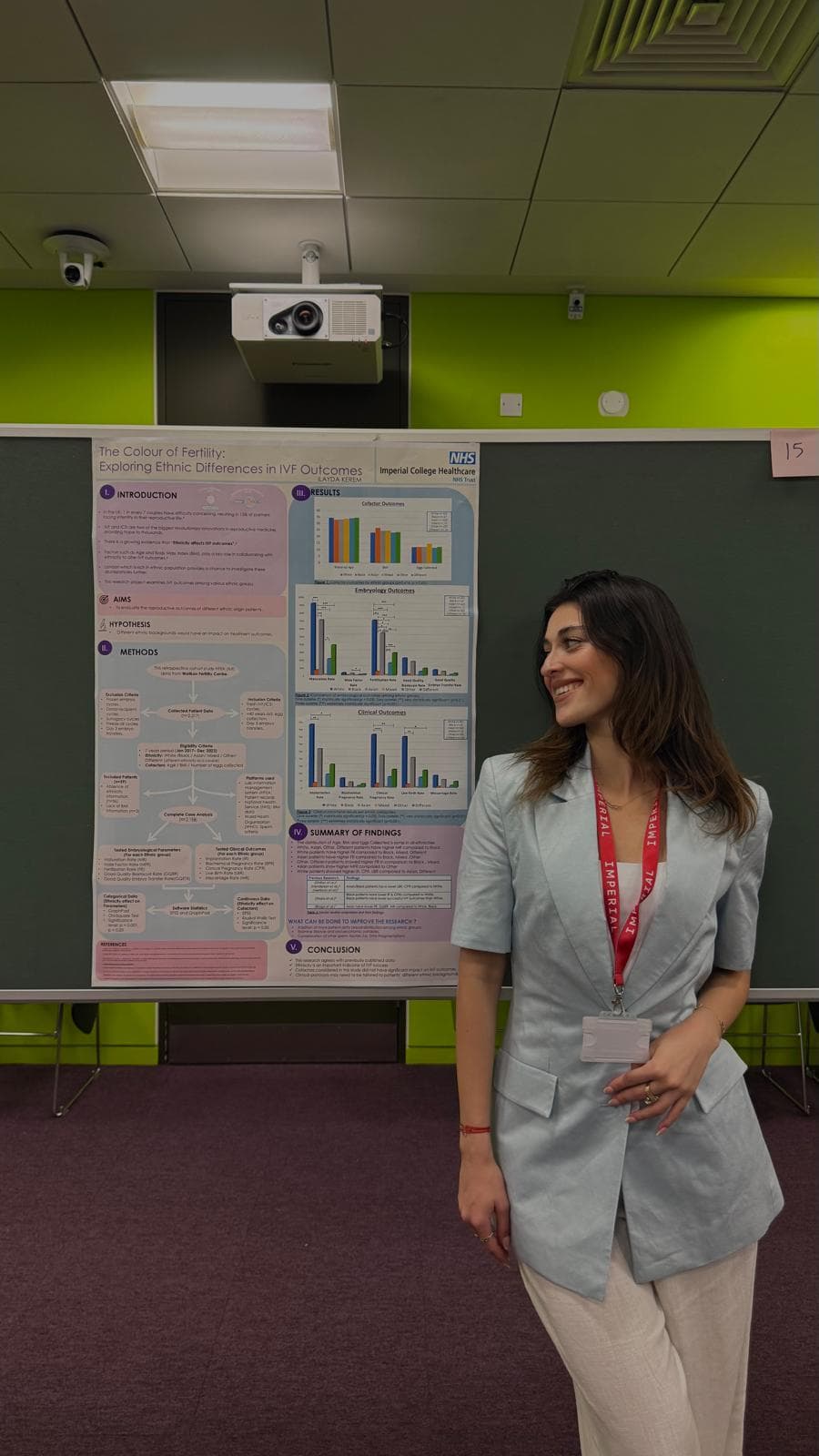
This Master's research project, conducted at Imperial College London, is a 7-year retrospective cohort study examining 2,155 IVF/ICSI treatment cycles performed at the Wolfson Fertility Centre between 2017 and 2023. The primary aim of the study was to investigate the influence of race and ethnicity on both embryological and clinical outcomes in assisted reproductive technologies (ART). Patients were classified into six ethnic groups: White, Black, Asian, Mixed, Other, and couples of different ethnic backgrounds. A comprehensive range of outcomes was evaluated, including oocyte maturation rate, fertilisation rate, blastocyst quality, implantation rate, clinical pregnancy rate, live birth rate, and miscarriage rate.
The findings demonstrated that key demographic factors known to influence IVF success — such as maternal age, Body Mass Index (BMI), and the number of oocytes retrieved — were distributed similarly across all ethnic groups and did not account for the observed differences in outcomes. However, several significant variations were identified in both embryological and clinical parameters. Black patients exhibited lower oocyte maturation rates compared with other ethnic groups, while patients of mixed ethnicity demonstrated the highest fertilisation rates. In terms of clinical outcomes, White patients showed significantly higher implantation, clinical pregnancy, and live birth rates when compared with Asian patients and couples of different ethnic backgrounds.
These findings suggest that ethnicity may play an important role in IVF outcomes beyond commonly recognised factors such as age, BMI, and ovarian response. The study contributes to the growing body of evidence highlighting ethnic disparities in reproductive medicine and underscores the importance of developing more personalised and equitable fertility treatment strategies. By exploring both laboratory and clinical outcomes within a diverse patient population, this research provides valuable insights that may support the future advancement of patient-centred fertility care and precision reproductive medicine.